🎧 Prefer to listen? Click the audio below to listen to me narrate this post.
I originally drafted this post over a year ago. It’s a part of the pilgrimage series I began in summer 2025 when I returned from a 10-day pilgrimage to Rome.
This post is about the time I spent at the ARSI, the Roman Archives of the Society of Jesus. The ARSI houses St. Ignatius of Loyola’s original writings among other historical documents. This visit wasn't part of the planned group pilgrimage I was on. It was connected to research for a discernment book I am working on.
So why has it taken me so long to write this post?
Here’s my best guess: I still don’t have words to describe the experience. This post still feels woefully incomplete. But here it is.
If you had asked me five years ago what my academic research looks like, I would have described myself suited up in fire turnout gear, notebook in hand, ready for a 12-hour shift at a fire station.
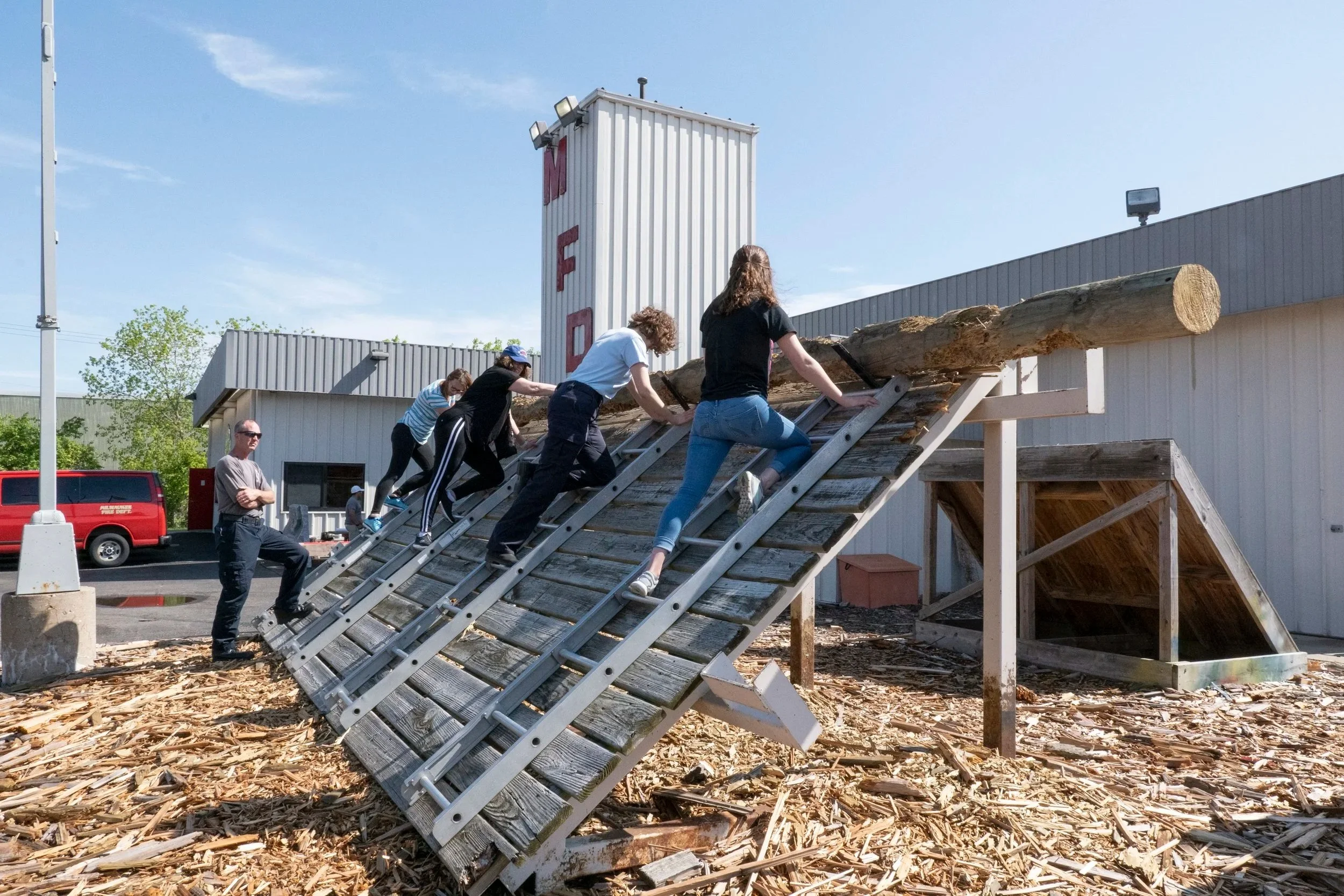
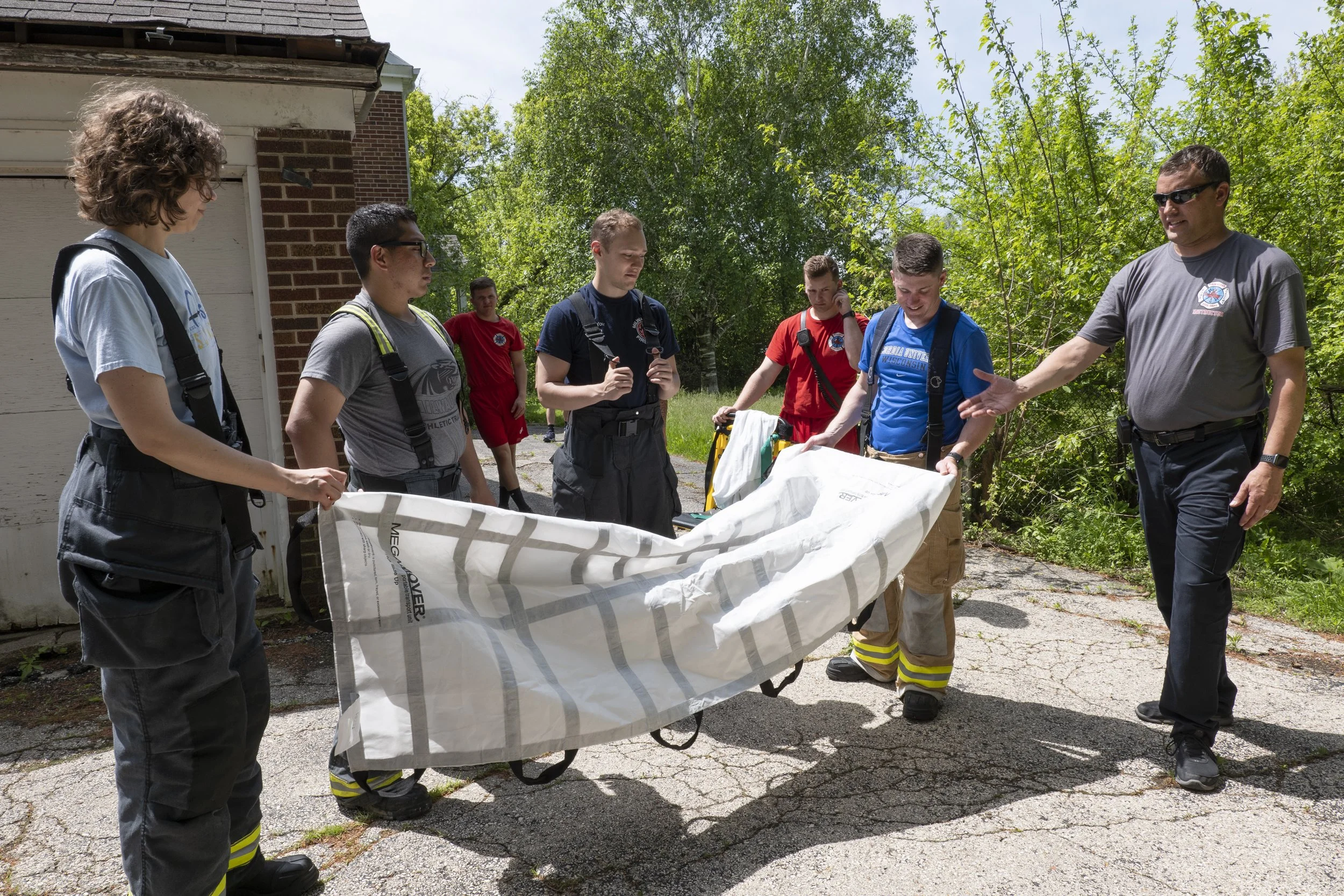
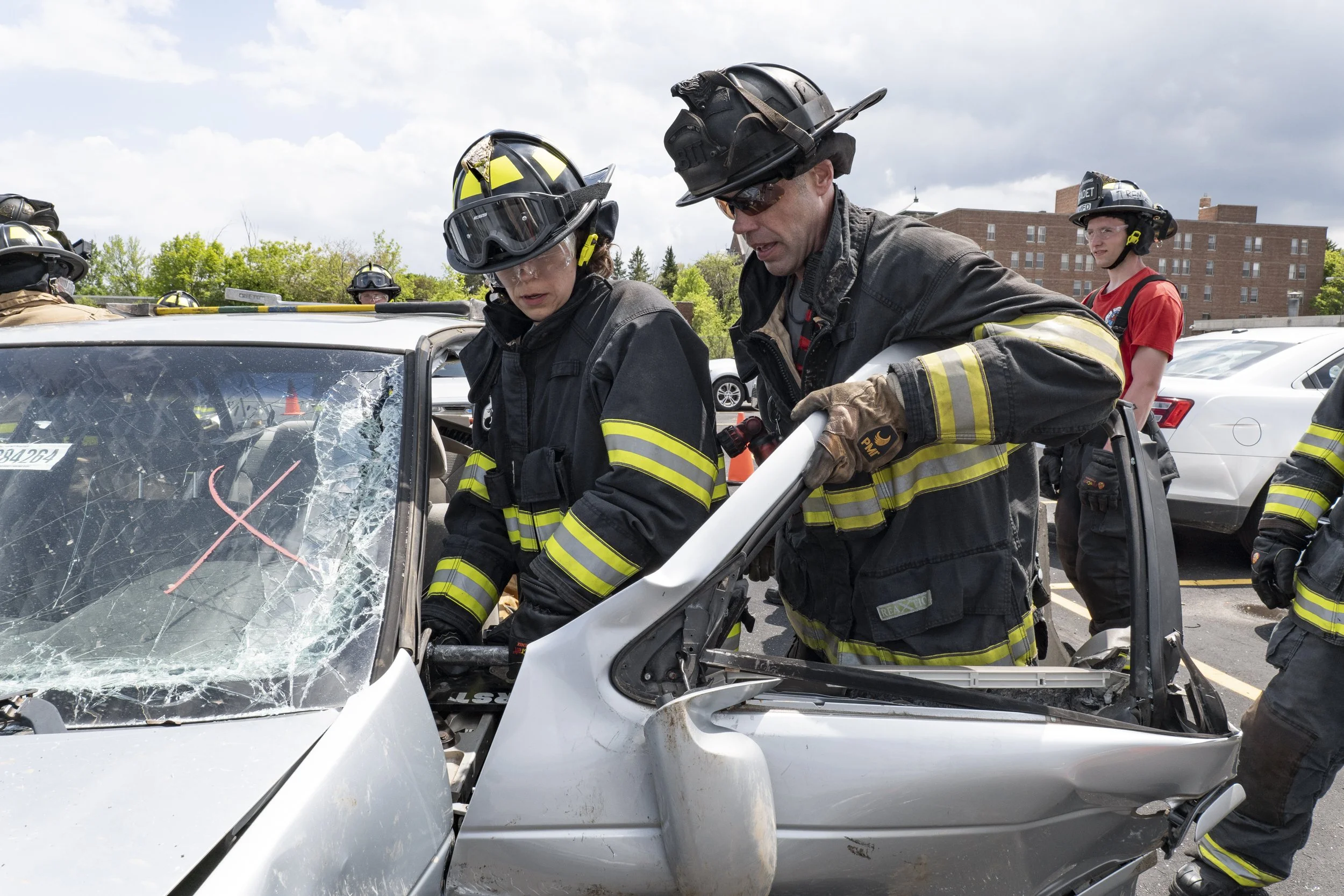
But in June 2025, I found myself not back on scene with EMS crews but in a hushed archive in Rome with only a pencil, paper, my ID, and 500-year-old manuscripts of St. Ignatius’s Spiritual Exercises and Spiritual Diary.
No one was more surprised by this turn than I was.
First and foremost, I am trained as a rhetorician and writing specialist. For over a decade, I conducted ethnographic, community-engaged research alongside firefighters and paramedics on sometimes chaotic and always unpredictable 911 scenes.
As part of my research, I observed the communication that facilitated life-saving care. I have been on the scene of active shootings alongside EMS teams as they rushed a patient to the hospital. I have hung onto handholds in the back of ambulances to maintain my balance while a team of paramedics brought a patient back to life.
For years, I witnessed how EMS crews managed the uncertainty and unpredictability of a 911 call using a combination of communication, medical skill, intuition, and wisdom honed by experience. I always worked in teams, never alone and never in silence. My research sites were the polar opposite of an archive.
But about six years ago, my research focus changed from how to manage uncertainty on a 911 scene to how to manage uncertainty in life. Enter St. Ignatius and his practice of discernment.
When I signed up for the pilgrimage to Rome in summer 2025, it occurred to me that I might be able to visit the archives that house the very documents in which St. Ignatius formalized his discernment practice.
Now, the manuscripts I wanted to see—The Spiritual Exercises and Spiritual Diary—have been digitized and are freely available online. I didn’t necessarily need to see them in person. So when I wrote my request to view them, I knew I was asking a lot of the archivists.
As part of their viewing requirements, the archives explicitly state that researchers need demonstrated reading knowledge of the original language. Ignatius wrote in Spanish. I minored in Italian. I can read a little Latin thanks to growing up Catholic and singing Latin in church choirs.
I hoped that was close enough.
I submitted my viewing request assuming either I wouldn’t hear back or I’d receive a polite version of “Thanks for your interest. It was cute, we’re busy, and best of luck with your research.”
Instead, a week later, I received a reply from ARSI.
“The manuscripts,” they explained, “are scanned and available digitally.”
“Yep,” I said to myself as I read the email. “Found them. Saw them. Sent in my request anyway to see them in person.”
The email continued: “The originals are extremely delicate and too important for regular consultation by scholars.”
My internal monologue continued: “Yep. Totally understandable. I can see where this is going.” I braced myself for a firm no.
And then I read the paragraph I was hoping for but not expecting:
“This being said, we have assessed your request and believe that we shall be able to concede to you very limited time, certainly not exceeding a few minutes, during which you may ‘view’ the original manuscripts under the supervision of an archivist.”
Wait, what?
A few minutes AND an expert to make sure I did everything correctly?
My reply was a professional version of “LET’S DO THIS!”
And then I started to cry.
My eyes welled with tears every time I told that story in the months leading up to the Rome trip. Other people started tearing up, too. It didn’t seem to matter who I was talking to. Spiritual direction directees, colleagues, friends with no connection to spiritual direction or St. Ignatius, my business leadership cohort—everyone teared up.
Given that I had cried almost every time I talked about the upcoming visit, I set myself one very practical goal for it: Don’t cry on St. Ignatius’s manuscripts.
The day of my scheduled appointment, I focused on that goal. As I left the hotel room, planning for a “very limited time” at the archives, I said to my partner, “I’ll be back in an hour.” She looked at me with a knowing and loving skepticism: “....sure. See you later today.”
Clearly she knew something I was oblivious to. This wasn’t going to be a quick visit.
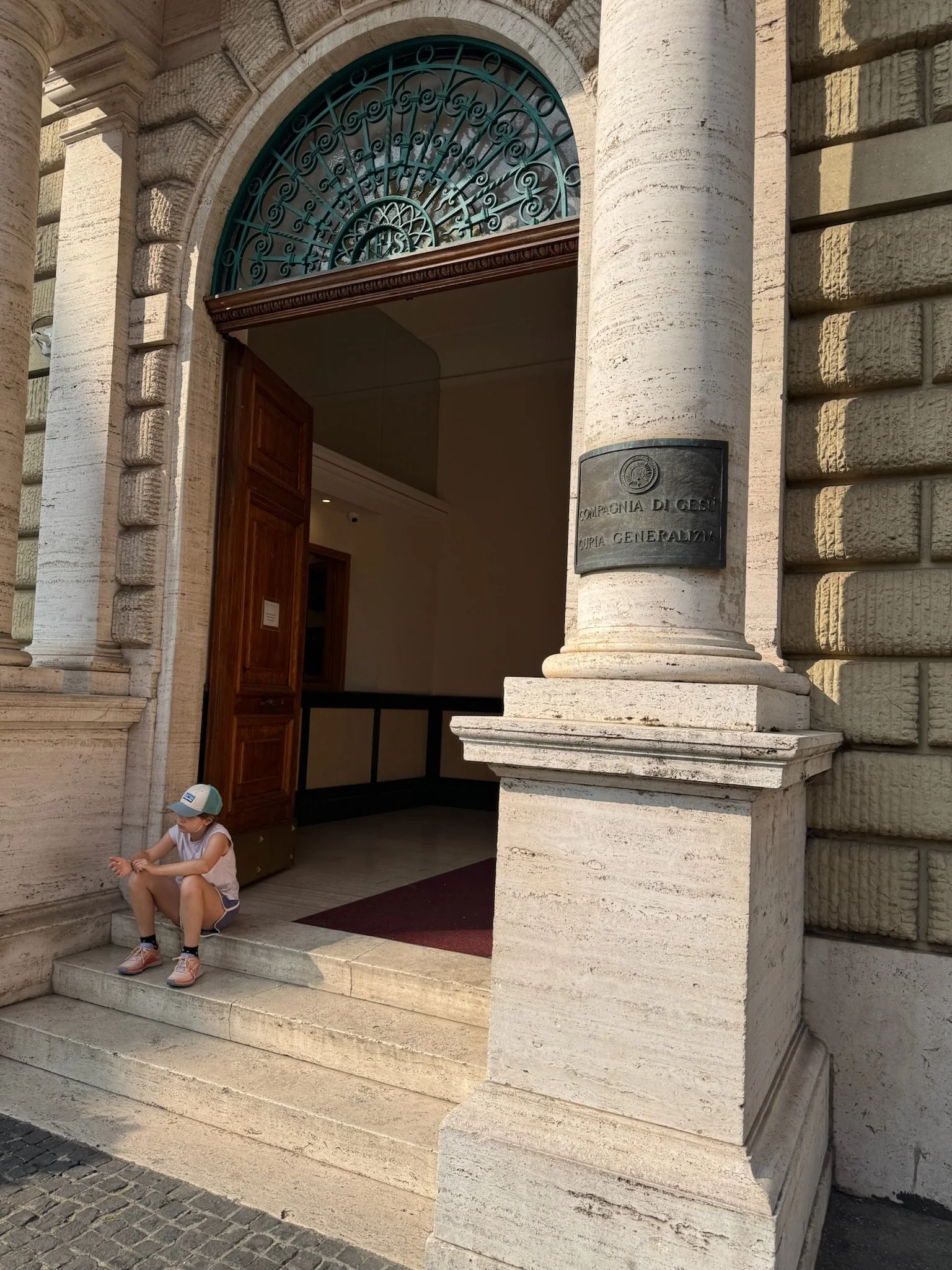
The Jesuit Curia entrance in Rome, Italy.
My entrance into the archives was something out of Legends of the Hidden Temple. After going to the incorrect building, I made my way to the archive building at the Jesuit Curia. I pressed the buzzer. I expected a voice to come through the speaker asking “Pronto?” so I could identify myself with the Italian phrases I’d been rehearsing for days: “Buon giorno, io sono professoressa Angeli. Ho un’appuntamento con Mauro questa mattina.”
There was no response to the buzzer.
The door just opened.
It wasn’t the entrance I was expecting, but clearly they were expecting me, a 5’10” American woman with a giant sunhat, backpack, and linen pants already drenched from the scorching June sun at 9am. I obviously was not a Jesuit, a priest, or someone used to the Roman heat.
I entered the building and followed stairways that led me to more locked doors. They, too, buzzed open without a word. I realized that I was likely on camera and someone was watching me find my way through the hallways.
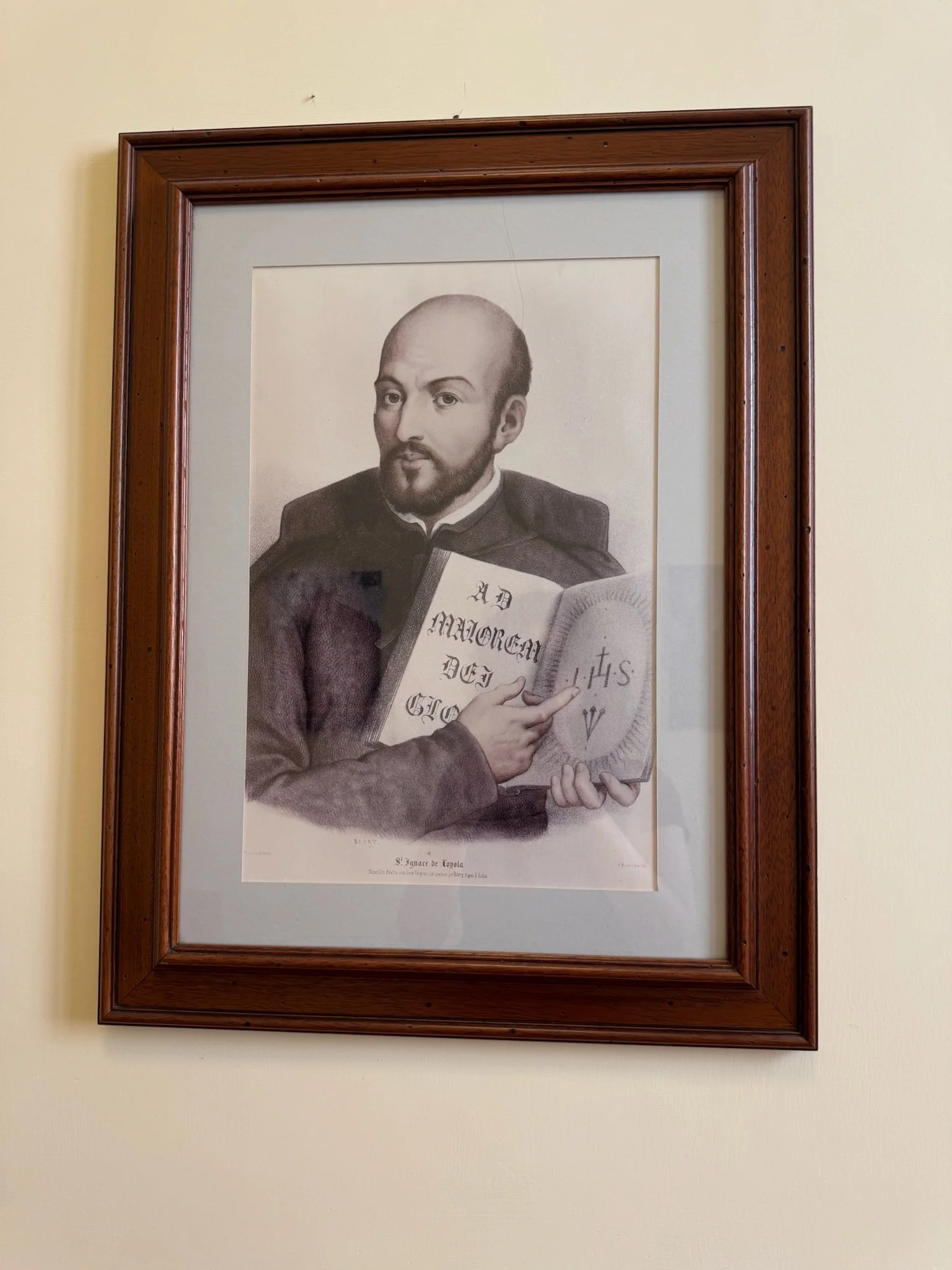
A print of St. Ignatius of Loyola that hangs in the Jesuit Curia.
I finally found my way to the archive and was enthusiastically greeted by Mauro, the archivist who would accompany me during my visit. Little did I know that he had a full morning planned for me.
First, I’d look through a transliteration of The Spiritual Exercises in Spanish and digitized translations of Spiritual Diary and The Spiritual Exercises, which were translated into Italian (a lucky break for me). I could make notes and prepare for which parts of the documents I wanted to focus on when I’d view the originals. Then, once I was ready, Mauro and I would go into a private reading room where the original manuscripts were waiting for me.
I took my time pouring over the transliteration and digitized translations. I compared them with my English translation, noting significant differences between the original Spanish and my English version. My Italian minor was coming to the rescue—it played an essential mediating role in this archival moment.
After at least an hour, I went to Mauro’s office and said, “Alright, I’m prepared and ready for our next stop.”
Mauro had a twinkle in his eye. He had the excitement of a kid on Christmas morning, and it was palpable and contagious. It was as if he knew what experience I was in for.
Up until that point, I had achieved my goal to not cry.
But then Mauro opened Ignatius’s Spiritual Exercises and held the text gently in his hands. From across the table, I examined Ignatius’s handwriting when something in the margins caught my eye and brought me to tears.
Ignatius made marginal notes.
He made edits.
They were not removed from this manuscript, tossed out as superfluous draft material, but preserved as part of the foundational history of Ignatian spirituality.
Ignatius’s writing process was right there in front of me. I saw the sentences and the sections he crossed out. I poured over the marginal notes that refined ideas in the main text and traced his thought process.
Seeing that first hand was mind blowing to me as a writing researcher, a writer, and someone who practices Ignatian discernment as a way of life.
I had more questions than answers, some of which I verbalized to Mauro. “I wonder what he was thinking here. Why did he edit this? Why did he replace this word with that word? Why did he strike out an entire reference to a Biblical passage?”
Mauro continued to carefully turn the pages in The Spiritual Exercises. Together we read through each page. When he turned to the First Principle and Foundation, a passage that opens the Exercises and summarizes Ignatius’s discernment practice, the tears I had been successfully holding back broke through.
The reality of the moment hit me.
It was a passage that I had been carefully studying and teaching in the months leading up to the visit. Mauro didn’t know that detail. I was reading the First Principle and Foundation on the same paper Ignatius himself saw 500 years earlier.
I wasn’t just crying. I was sobbing.
Mauro held the book for me as my head fells into my hands and I cried on the table (at a safe distance away from the manuscripts). He held more for me than the book—he held the sacred space that surrounded both of us in the small silent room of the archives. He allowed me to feel whatever I was feeling, a feeling I still, over a year later, cannot name.
When I looked up from my tears, I saw Mauro smiling. I grinned and chuckled, admitting my embarrassment at my lack of professionalism. Without missing a beat, Mauro said, “Do not worry. Ignatius cried all the time.”
When we finished our time with the manuscripts, Mauro carefully packed up the books as I packed up my notes. I met my goal of not crying on the manuscripts, and I was relieved. I asked Mauro if we could take a picture together.
When we checked to approve our selfie, Mauro zoomed in and noticed something neither of us noticed before.
“Look who was watching over us this whole time,” he said. It was a print of St. Ignatius, photobombing us with what appeared to be a playful smirk.
“We are three,” Mauro said.
And indeed, we were.
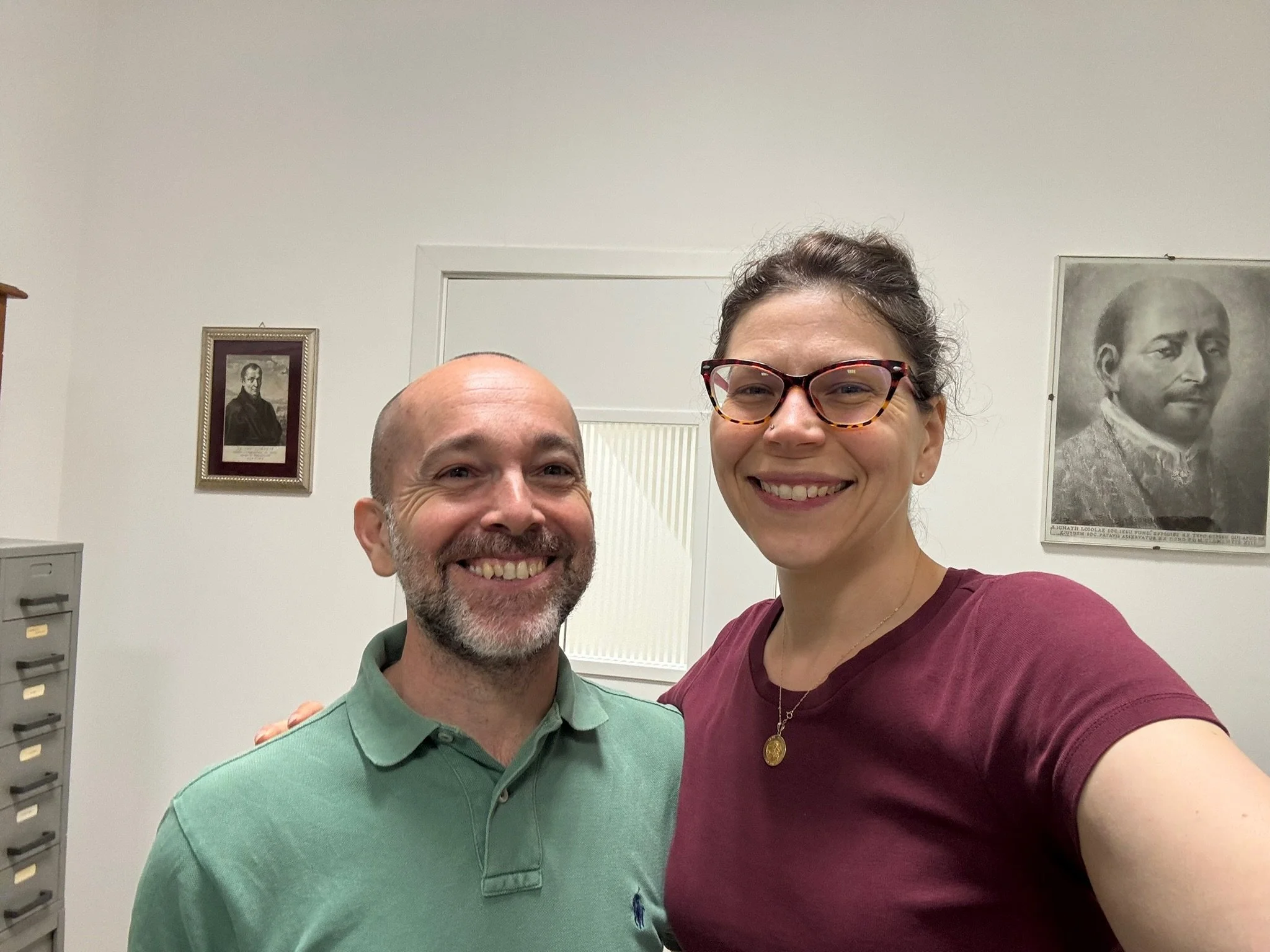
Left to right: Mauro, Liz, and St. Ignatius.
A year later, I still feel that spirit and energy that was in that reading room. The consolations—the gratitude, humility, awe—were overwhelming, transporting me into a connection with Ignatius and God that defied time and space.
Maybe that’s why I’m still trying to make sense of it. Maybe I never fully will. Maybe that’s ok. Maybe that’s just one of the mysteries of faith.
Grazie di cuore, Mauro, per il tuo tempo e la tua cura. Alla prossima visita!